Group lesson registration is now open. Sign up by April 24 here.
D
H
M
S

How to Say Happy Easter in Serbian (and What to Eat While You’re Saying It)

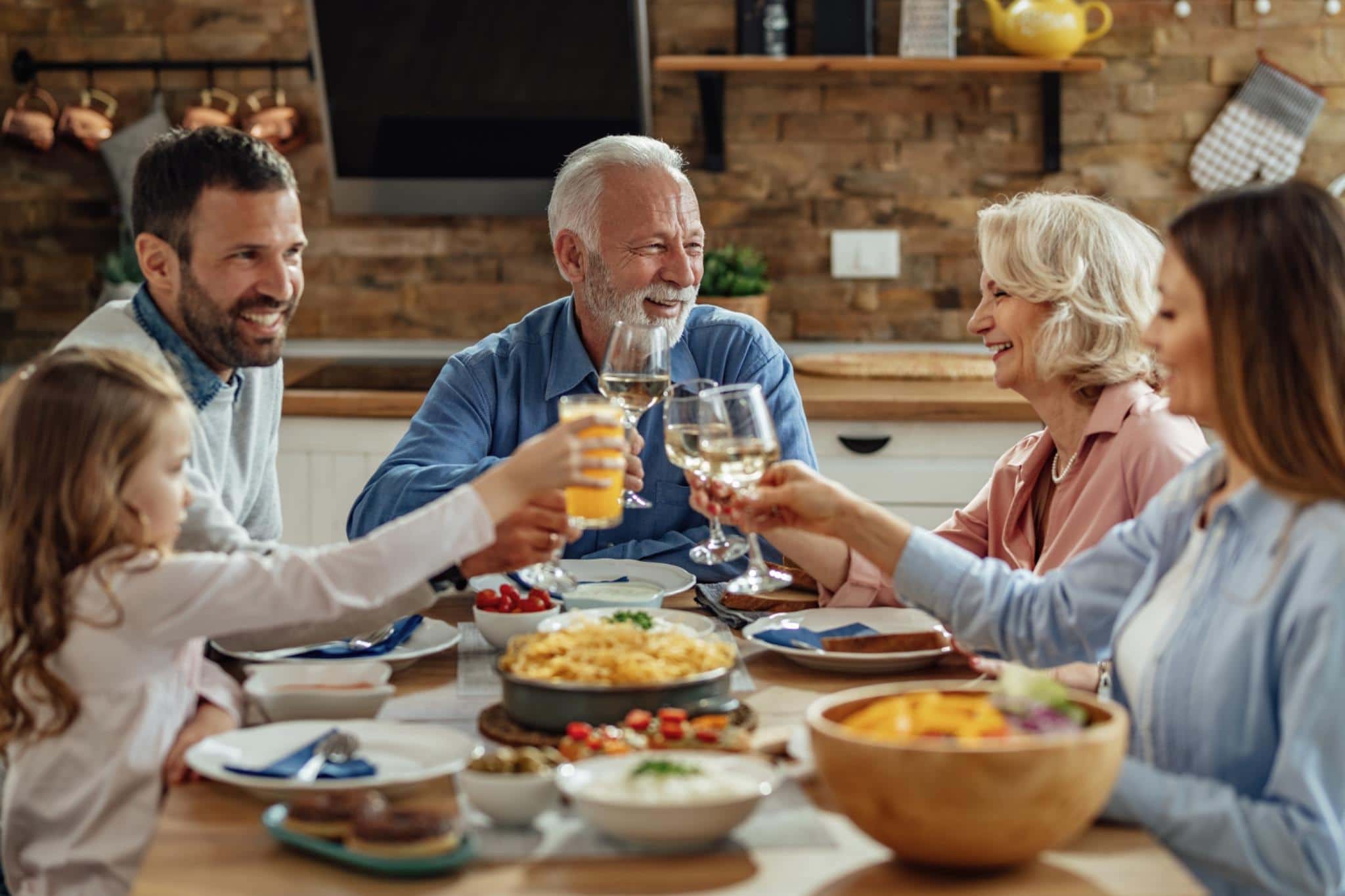
A family gathered around a dining table, sharing a meal and toasting

Easter is a lot more than a simple holiday in Serbia. It’s time for gathering, joy and tradition passed on from generation to generation. But let’s be honest—it’s also about food. A lot of food.

After weeks of fasting, Easter arrives like a well-deserved feast, and Serbian tables do not disappoint. Think colourful eggs, roast lamb, fresh bread, cakes… and at least one relative insisting you haven’t eaten enough (you have, but that’s not the point).

It’s one of those rare moments where everything happens at once: food, stories, culture, and someone refilling your plate before you notice it’s empty. You might politely say you’re full, but that won’t stop your host from adding “još malo” (just a little more) to your plate. Refusing once is expected; accepting the second time is almost guaranteed.

And somewhere between cracking eggs and going back for seconds (or thirds), you’ll probably hear a greeting that sounds nothing like “Happy Easter”, but carries a whole lot more meaning.

How to Say Happy Easter in Serbian

If you’re in Serbia around Easter, forget everything you know about saying “Happy Easter”. This is where things get fun (and slightly tongue-twisty).

Instead of a simple greeting, Serbians go all in with: “Hristos vaskrse!”, which literally means “Christ has risen!” Sounds dramatic? It is. And the reply is just as intense: “Vaistinu vaskrse!” (“Indeed, He has risen!”). 

It’s less of a greeting and more of a mini call-and-response performance. You’ll hear it everywhere: in the street, at lunch, even from people you barely know.

Now, if your brain freezes halfway through vaskrse, don’t panic. You can always play it safe with “Srećan Uskrs!” or “Srećan Vaskrs!” 

Both mean “Happy Easter,” and no one will judge you (much). The difference? Just dialect and personal preference, with Vaskrs being the more archaic name for the holiday.

That said, if you do manage to confidently say “Hristos vaskrse,” expect impressed looks. You’ve basically unlocked a cultural achievement. Just be ready for the reply — there’s no backing out once you start.

What Is “Post”?

Veliki post, or Great Lent, is a 40-day fasting period. It begins, you guessed it, 40 days before Easter and finishes on Easter Sunday.

Each of the 7 weeks of Veliki post has its name and specific rules on what you can or can’t eat. However, the most common rule is that during this time, Serbs avoid foods of animal origin, while fish is allowed. Fasting is part of the tradition, but in practice, most Serbs fast only on Good Friday. 

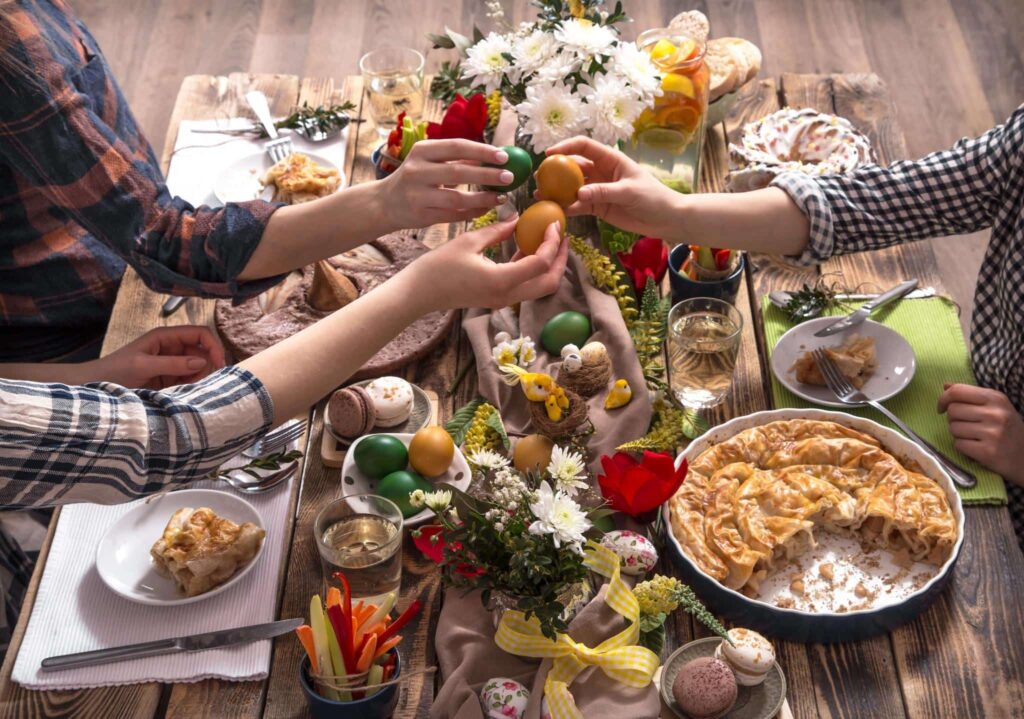
Friends gathered over an Easter spread, holding colorful eggs
Eggs, Cheers & Easter Feasts 🥚🥂

A Typical Serbian Easter Table

If you find yourself invited to a Serbian home for Easter, one thing is certain: you will not leave hungry. Not even close.

It all usually starts with meze, the ultimate opening act. Picture a table covered in kulen, thin slices of cured pork, sausages, homemade bacon, and a generous selection of cheeses like beli sir (white cheese) and kačkavalj. It’s the kind of spread that makes you seriously question whether you even need a main course.

At this point, you might think this is the meal. It’s not. Then comes the main course: roast meat (often lamb or pork) served with potatoes or other simple garnishes, usually preceded by a warm bowl of supa or čorba, to officially kick things off.

Then come the stars of the show: colorful Easter eggs, proudly displayed in a basket with straw or grass. And yes, there will be kucanje jajima (egg tapping), where everyone suddenly becomes very competitive over whose egg is the strongest.

Every family has that one person who tries to sneak in a wooden egg and act completely innocent about it. It’s never exactly subtle, and that’s what makes it even funnier. The same accusations, the same dramatic reveal, and somehow, it’s just as entertaining every single year.

You’ll also notice a fresh, spring-like vibe, lots of salads and vegetables. And of course, the queen of them all: ruska salata. Creamy, comforting, and absolutely unavoidable.

Plates are rarely empty for long, and someone is always keeping an eye on whether you need more food, even if you clearly don’t.

But food is only half the experience. You’ll hear phrases like “Poslužite se!” (Help yourself), “Prijatno!” (Enjoy your meal), and probably a cheerful “Živeli!” (Cheers). Politeness rule number one: say thank you… and then accept more food anyway.

Because in Serbia, Easter isn’t just about eating. It’s about being warmly (and persistently) fed.
Food Vocabulary List and Useful Phrases

By now, you’ve seen the table, tasted the food, and probably heard the same few phrases repeated more than once. So why not learn a few of them yourself?

Easter is actually the perfect time to pick up some practical Serbian, because everything is happening right in front of you. From naming dishes to offering food or simply saying “this is delicious,” these are the kinds of words and phrases you’ll hear (and use) again and again.

And the best part? You don’t need to be fluent. Even a couple of well-timed words can go a long way, especially at a Serbian table.

Uskršnja trpeza (Easter Spread)

  • Uskršnja pogača (Easter bread)
  • Uskršnja jaja (Easter eggs)
  • Pečenje (roast meat)
  • Meso (meat)
  • Sir (cheese)
  • Supa (clear soup)
  • Čorba (thick soup / stew)
  • Pogača (traditional bread)
  • Torta (cake)
  • Kolači (small cakes / desserts)
  • Rakija (fruit brandy)
  • Vino (wine)
  • Kafa (coffee)

Useful Phrases

  • Prijatno! (Enjoy your meal!)
  • Živeli! (Cheers!)
  • Srećan Uskrs! (Happy Easter!)
  • Poslužite se! (Help yourself!)
  • Ne mogu više, prejeo/prejela sam se! (I can’t eat another bight; I’m stuffed!)
  • Izvolite! (Here you go / please take some)

Useful Verbs

  • Farbati jaja (to dye eggs)
  • Kucati se jajima (to tap eggs)
  • Čestitati (to congratulate / to wish well)
  • Slaviti (to celebrate)
  • Poslužiti (to serve)
  • Nazdraviti (to toast / say cheers)

Cultural Tips for Foreigners

Serbs celebrate Easter with friends and family at home, with a huge feast and more colourful eggs than you thought possible. If you get invited to someone’s home, congratulations, you’re in for a proper experience.

First rule: don’t show up empty-handed. It’s customary to bring coloured eggs to exchange with your host. No eggs? Don’t worry about it. Flowers, a nice bottle of wine, or chocolates are also a great choice.

Once you arrive, prepare yourself. Serbian hosts take their role seriously. You’ll be offered food, lots of it, and very likely a shot of rakija “just to start.” (It’s never just one, but let’s not get ahead of ourselves.)

After the feast, there’s one final step: appreciation. A simple “Hvala na ručku, bilo je ukusno!” (Thank you for the lunch, it was delicious!) goes a long way, especially with the person who spent hours cooking. And trust us, they’ll already be thinking about what to feed you next.

Five Rakijas, at Least Three Courses and One Unbreakable Egg Later

If there’s one thing you’ll quickly realise during Easter in Serbia, it’s that food is never just food. It’s a way of welcoming people, telling stories, and keeping traditions alive, often all at the same time.

At first, it feels like you’re just there for a good meal. But after a few rounds of “Poslužite se!” and another spoonful of ruska salata, you start to realise it’s not only about eating. The traditions, the rituals, and the warm insistence that you eat more make it a shared experience that doesn’t really need translation.

And that’s the beauty of it. Even if your Serbian is limited to “Hvala” and a slightly nervous “Hristos vaskrse,” you’ll still understand what’s going on. Because hospitality, warmth, and a table full of food? Those translate perfectly.

By the end of it, you realise Easter in Serbia isn’t just something to learn about. It’s something you live through. You experience it with all your senses, and before you know it, you’re heading home full and already planning your next visit.

Want to do more than just say “Prijatno”? Join our group classes and bring your Serbian to life.

Leave a Reply