
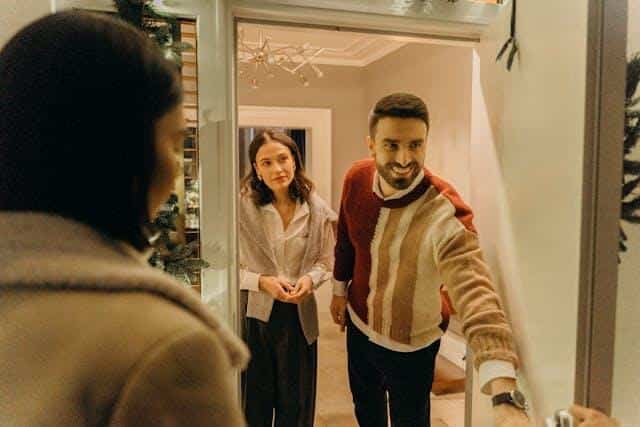
In the Balkans, neighbors aren’t just people who happen to live next door. Most often, these folks double as uninvited guests, professional gossips, or emergency babysitters. And if you’re lucky, your Serbian neighbors may even become your unofficial family.
Welcome to Serbian neighborhood culture — a blend of warmth, rituals, and unspoken rules that every newcomer should know.
Traveling around Serbia is all about fun — kafana hopping, sampling local delicacies, and of course, washing it all down with homemade rakija.
Moving to Serbia is a different beast. All the paperwork, apartment hunting, and language barrier are bound to stress you out.
And what about Serbian neighbors? What’s it like to live among them?
Worry not, because this guide to Serbian community living will help you settle in and thrive among your new neighbors.
In Serbia, saying Jesi li za kafu? (Do you want to have coffee?), isn’t really about coffee. It’s an invitation to sit, chat, and probably stay for at least an hour.
The unwritten rules of Serbian coffee time are simple:
On the other hand, coffee can also be a hint for you to leave once you’ve overstayed your welcome. So, if it’s been a couple of hours since you’ve dropped in and your komšija (neighbor) is offering yet another cup, don’t accept it. That’s your cue to pack up and hit the road.
In many countries, borrowing sugar is a cliché. Not in Serbia!
Are you out of flour, baking powder, or eggs, and the local store is closed? Just knock on your neighbor’s door. Someone will always have it — and they’ll likely offer more than you asked for.
The rule of thumb is: if you borrow, return — ideally with a small thank-you (homemade cookies, perhaps).
In any case, don’t pretend you forgot because neighbors have long memories. And when you lend, expect your item to travel around the block before coming back.
Finally, borrowing isn’t just convenience — it’s a show of trust and belonging. Once you’ve exchanged baking powder, you’ve officially joined the neighborhood network.
Who needs tabloids when you have neighbors? In Serbia, gossip — or ogovaranje — is less about malice and more about maintaining social balance.
Typical topics include fashion, lifestyle, and shopping. For instance, did you see what she wore to the market? Another classic — look at him drinking beer before noon. Or, did you see their shiny new car? Where did they get the money for it?
Anything can be gossip, but you get the point.
No matter who or what it’s about, the trick is subtlety. You gossip just enough to stay informed, but never so loudly that the subject hears you.
Another thing: neighbors who gossip with you likely gossip about you too. But as the saying goes, if no one’s talking about you, you probably don’t live there.

Every Serbian building has a mysterious concept called kućni red — literally, house order. It’s not written on any government website, but break it and you’ll feel it.
According to it, vacuuming after 10 p.m. is unthinkable. Hammering on Sunday morning? A sin.
Of course, playing loud music after midnight is a huge no-no, as well.
That said, Serbia is no Switzerland, so you can still breathe, walk around your apartment, and even do laundry in the evening. After all, that’s when jeftina struja (off-peak electricity rate) kicks in.
Just don’t make a ruckus during the quiet hours (typically 10 p.m. to 8 a.m. on weekdays and 10 p.m, to 10 a.m. on weekends), and you’ll be fine.
If you’re new to Serbia, following the house rules is essential. It’s not just about noise — it’s about respect, rhythm, and neighborly peace.
Serbian people will pester you about tiny things like parking spots or noisy pets. The moment something goes wrong, though, they suddenly turn into a rescue team in slippers.
Your car refuses to start on a frosty morning? A neighbor will appear out of thin air, complete with jumper cables and a steaming cup of coffee, asking Treba li pomoć? (Need help?).
Feeling sick? Expect soup, lemons, and the classic advice — drink rakija, it kills everything.
So, yes, bickering and gossiping may be the go-to pastime around your neighborhood. But in times of need, these people show up.
Someone will help carry your groceries, fix a leaky faucet, or drive you to the hospital. And perhaps you’ll do the same next time, because that’s how things work around here.
Stick around long enough, and one day your neighbor will knock and casually say, Dođi na slavu — come to our slava. Or, it might be a Christmas feast, birthday, graduation, Tuesday — you name it.
No matter the occasion, Serbs celebrate in style, with mountains of food and plenty of booze. And usually, the whole block gets an invite.
Declining isn’t really an option, either. Not because it’s rude, but because your neighbor will probably show up at your door anyway, plate in hand, insisting you try just a little bit.
Truth be told, this happens more in the countryside than in the city, but the principle is the same: neighborhood celebrations are serious business.
Want to get in on all of them? Make the first move. Throw a small party, a BBQ, whatever, and invite everyone. Serbs take hospitality very seriously, so when it’s their turn to celebrate, they’ll return the favor, no questions asked.

Before you nail Serbian grammar, learn the true survival skill — greeting your neighbors. As it turns out, good fences don’t make good neighbors — dobar dan (hello) does.
Alternatively, go with the more casual ćao (hi). Whatever you say, top it off with a smile and you’re golden.
Then, small talk follows automatically. The weather, electricity bills, or how everything used to be cheaper — classic hits. Sometimes it’s quick, sometimes you’re trapped for ten minutes discussing tomatoes.
If the chat drifts into politics or football, stay calm. Smile, nod, and drop a casual Tako je, bre! (Exactly!). Works every time.
Mastered the greetings? Survived the small talk? Congratulations, you’re officially part of the building!
Ah, those neighbors — can’t live with them, but you also can’t stay on top of the fresh gossip without them. All jokes aside, embrace your Serbian neighbors and you’ll always have someone to turn to if you’re out of coffee and sugar, but also when you need an urgent ride to the hospital.
By the way, mixing and mingling with locals is way easier if you speak their lingo. While you’re settling in, check out our beginner course. It’s got all you need for your day-to-day life in Serbia, including handy survival phrases, quizzes, video lectures, and more. Dobro došli!